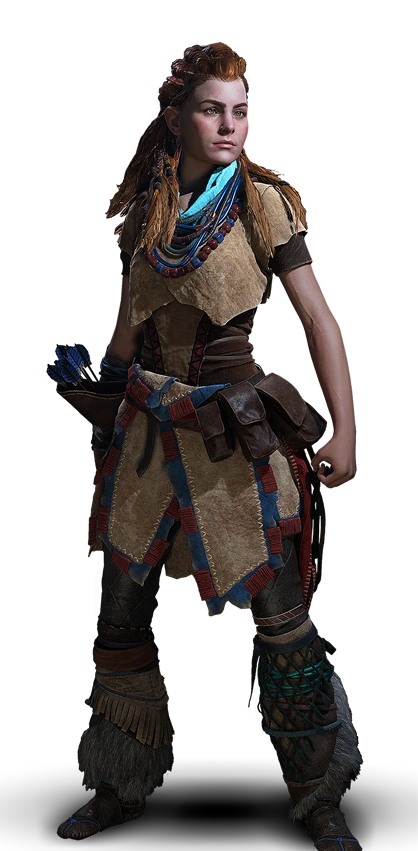
Aloy wearing her Outcast outfit.
The term outcast refers to members of the Nora tribe that are shunned by the tribe for breaking its laws.
Overview
When a Nora tribe member is accused of a crime, the Matriarchs are called upon to judge and sentence them, with being deemed an outcast being among the punishments that may be given. The crimes of an outcast can range from minor infractions like fighting other tribe members,[2] to crimes such as stealing[3] or murder,[4][5][1] to entering ruins of the Metal World without the appropriate blessings.[6] In Aloy's case, she was cast out at birth for being motherless. Outcasts are given a term for which they are to remain shunned; ranging from a few months to a life sentence.
Outcasts are banned from entering most Nora settlements until their sentence is complete. They are expected to fend for themselves, although Braves will sometimes offer protection when needed.[2]
Outcasts are forbidden from speaking with anyone, likewise, non-outcasts are forbidden from speaking with outcasts.[7] However, some outcasts and tribe members either choose to ignore this law, as in the case of Aloy, or find clever loopholes, as is the case of Grata, who indirectly communicates to Aloy while praying to All-Mother.[8] The only time an outcast is permitted to speak to others is when allowed to do so by a High Matriarch,[9] or in the case of a child outcast, while they are attending the Proving.[10] Rost and Aloy being allowed to speak to each other appears to be an exception in order for Rost to properly complete his unique objective to raise Aloy.
Rost's case of being an outcast is unique among others. Upon completing his task as a Death-Seeker and he returned to the border of the Sacred Lands while near-death, intending to die as close to the Sacred Lands as he could. He was dragged across by a Brave and nursed back to health. Finding themselves unable to drive him back out of the Sacred Lands, the Matriarchs allowed Rost to continue living his life in the Sacred Lands as an outcast so long as he never spoke of this exception.[11]
Child Outcasts

A Nora mother leading children away from the child outcast Aloy.[12]
Children can become outcasts. Child outcasts are subject to the same rules as adult outcasts, plus one clause that specifically applies to them: when a child outcast reaches 18 years old,[1] they are allowed to partake in the Proving. If they complete the Proving, they are no longer an outcast and will be made a Brave. Aloy is the only known outcast child to exercise this right.[1] During the celebration before the Proving, the child outcast will be allowed into Mother's Heart to join the celebrations and speak to other tribe members.[13] Presumably, if they fail to complete the Proving, they will remain an outcast.
The only known outcast children known to Teersa are Aloy and a 13 year old boy that was cast out for killing his mother. However, he didn't attend the Proving the year he would've been old enough to.[1]
Exiles
Any Nora who leaves the Sacred Lands without a Seeker blessing are exiled from the tribe. Exiles are treated similarly to outlanders, as if an exile reenters the Sacred Lands, they will be deemed as trespassing and either driven back out[11] or killed.
Due to Aloy's actions, the Sacred Lands opened up, allowing exiles to return.[14]
Attitudes Towards Outcasts
The attitude towards the system of banishment in place of other punishments varies: Teersa views the practice as relatively humane as other tribes would often resort to execution.[1] Others, such as Aloy, believe it can be too harsh, especially for as long as she had to endure it (the first 18 years of her life).[15] Erend, a member of the Oseram tribe, views the practice as cruel.[16]
Most Nora adhere to the rule forbidding speaking with outcasts, openly shunning them. For some, this is also an invitation to be hostile towards outcasts; such as Bast throwing a rock at Aloy's head and verbally harassing her.[17][10] However, some are at least tentatively accepting of outcasts coming to their aid, as Olara,[18] Thok, and Arana are with Aloy.[19]
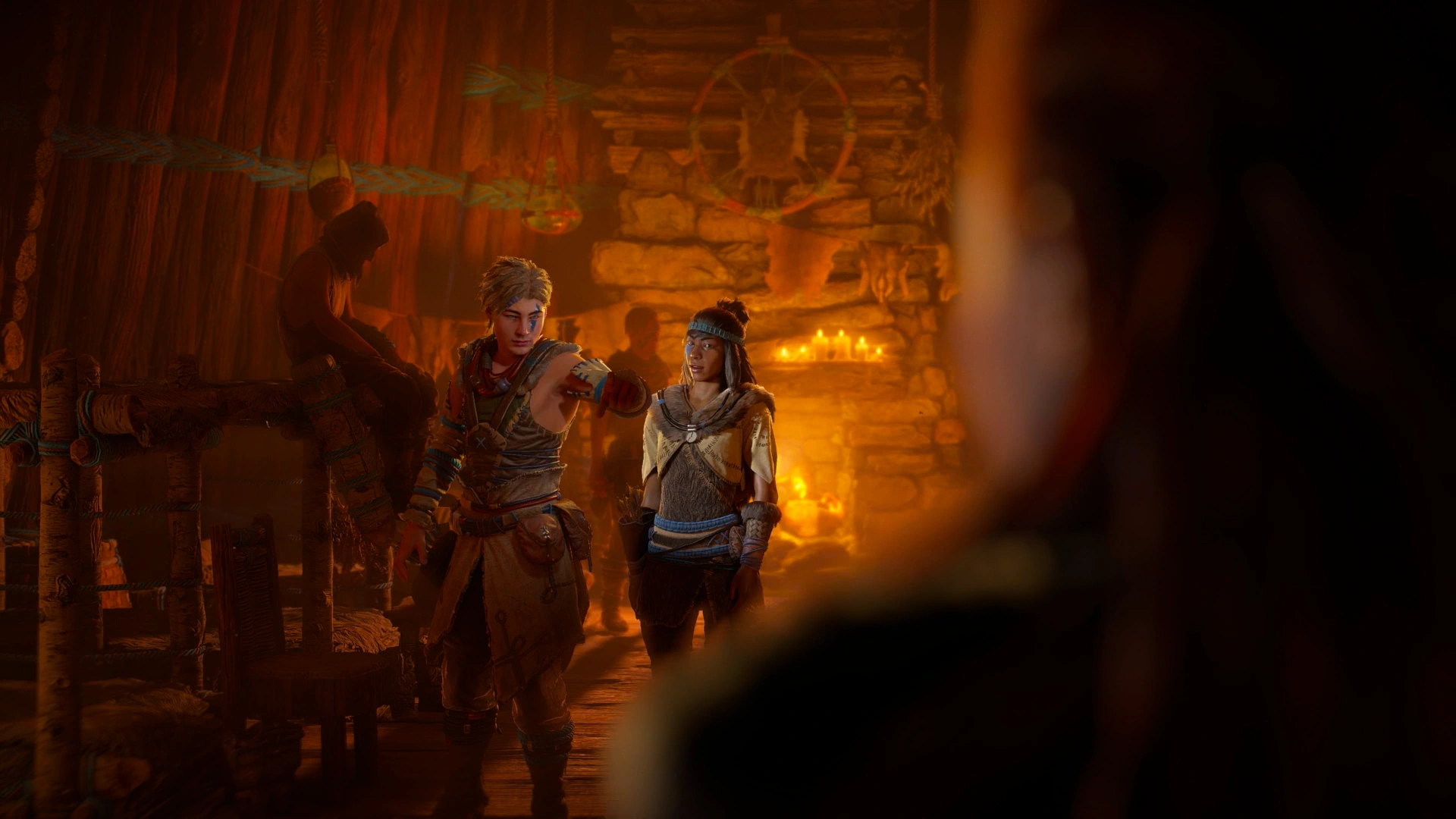
Even after an outcast is allowed back into Nora society, they may still face hostility. Lansra and Resh, for example, continues to be antagonistic towards Aloy even after she is completes the Proving and is no longer an outcast, with Resh and other Brave continuing to address Aloy as such.[20] However, these appear to be a vocal minority, as most other Nora appear fully accepting of Aloy once she's no longer an outcast.
Among some outcasts, despite the tribal law prohibiting speaking to each other, there exists a sort of camaraderie; a willingness to help those who are in need, such as Aloy and Rost were with Grata, who was too old to hunt for herself.[8] Even after he was welcomed back into the tribe, Karst continued secretly trading with outcasts.[21]
History
The origin of the Nora practice of shunning is unknown, but given that it is a well-established custom, it is likely to have been around for several generations, if not centuries. The practice of shunning may have been adapted from the punishment used by the multisevitors on those born within ELEUTHIA-9 who broke community rules, during which they were apparently not allowed to speak.[22]
Horizon Zero Dawn
After the Proving and War Party massacres, the Braves were wounded and stretched thin, allowing bandits to sneak through the border into the Sacred Lands. At least two groups of outcasts formed for the sake of survival. One group was led by Jom, comprised mainly of outcasts with life sentences. With Aloy's permission, the group took shelter in the bandit camp in Devil's Thirst once it had been cleared out.[23] The other group was led by Kurnst, made up of outcasts with lesser offenses (none of them were murderers), based west of Mother's Crown.[24]
During and after the Eclipse's assault on the Sacred Lands, Teersa and Jezza allowed the entire Nora tribe,[25] including outcasts,[26] into All-Mother Mountain for the sake of survival.[25]
Known Outcasts

.png "Odd Grata (HZDR).png (1.1 MB)")
.png "Jom (HZDR).png (1.52 MB)")
.png "Kam (HZDR).png (750 KB)")
.jpg "Kurnst (HZD).jpg (98 KB)")
.png "Nora Keeper (HZDR).png (1.44 MB)")
.png "Yun (HZDR).png (1.57 MB)")
Deceased Outcasts

Former Outcasts

.png "Brom (HZDR).png (1.25 MB)")


.png)
.png)
Trivia
- Many outcasts use brown and white face paint as opposed to the traditional blue of the Nora.
- In Ancient Greece, the Athenians had a practice called 'ostracism.' Citizens would write an undesirable person's name on a shard of pottery and place it in a large public container; if a citizen's name was written enough times, they would be banished from the city for ten years.
References
- ↑ 1.0 1.1 1.2 1.3 1.4 1.5 As mentioned by Teersa during Mother's Heart.
- ↑ 2.0 2.1 As mentioned by Kurnst during Insult to Injury.
- ↑ As mentioned by Cren during Nora Hunting Grounds.
- ↑ As mentioned by Jom during Devil's Thirst Bandit Camp.
- ↑ As mentioned by Yun during Traitor's Bounty.
- ↑ As mentioned by Karst during The Point of the Spear.
- ↑ As mentioned by Rost during The Point of the Spear.
- ↑ 8.0 8.1 Odd Grata
- ↑ Intro Movie
- ↑ 10.0 10.1 10.2 Mother's Heart (Quest)
- ↑ 11.0 11.1 As mentioned by Teersa after completing The Heart of the Nora.
- ↑ A Gift from the Past
- ↑ The Proving
- ↑ As mentioned by Nakoa during The Looming Shadow.
- ↑ As mentioned by Aloy during Mother's Heart.
- ↑ As mentioned by Erend Vanguardsman during Mother's Heart.
- ↑ Lessons of the Wild
- ↑ The Forgotten
- ↑ In Her Mother's Footsteps
- ↑ The Womb of the Mountain
- ↑ The Point of the Spear
- ↑ E9B1 Incident Log B
- ↑ Devil's Thirst Bandit Camp
- ↑ Insult to Injury
- ↑ 25.0 25.1 As mentioned by Varl during The Heart of the Nora.
- ↑ As mentioned by Olara during/after completing The Heart of the Nora.
| Nora | |
|---|---|
| High Matriarchs | Jezza - Lansra - Teersa |
| Braves | Sona (War-Chief) - Aloy - Bast - Den - Dran - Ferl - Jarg - Jarm - Marea - Muns - Resh - Teb's father - Vala - Varl |
| Seekers | Aloy - Marea - Sona - Teb - Varl |
| Outcasts | Brom - Cren - Fens - Grata - Jom - Kam - Kurnst - Nora Keeper - Outcast Boy - Rost - Yun |
| Other members | Alana - Arana - Dral - Enara - Fia - Grist - Jun - Karst - Loha - Lut - Nakoa - Olara - Orn - Rem - Solai - Taim - Thira - Thok - Yan |